Gas Chromatography
Gas Chromatography Testing: Precision in Analytical Solutions
Gas Chromatography Testing, commonly known as GC testing, is an analytical technique used to separate, identify, and quantify chemical constituents of interest from various samples. It can analyze trace complex chemical mixtures and smaller amounts of various compounds that could be present in a sample. GC testing is indispensable in pharmaceutical research and development, environmental monitoring, food safety, and many others. GC analysis offers the highest degree of sensitivity and precision, and GC testing meets the stringent requirements for quality control, regulatory compliance, and product safety.
What is Gas Chromatography Testing?
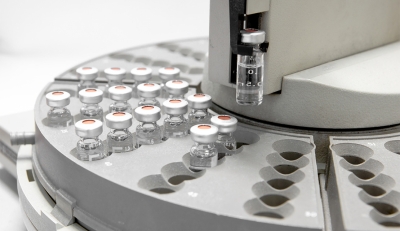
Gas Chromatography testing is the process of separating a volatile sample into its components, directing the sample through a tube (column) filled with a carrier gas. The sample to be analyzed is placed in a syringe and injected into a heated injection port bubbler where it is vaporized. The vapor is swept through the column by the carrier gas which is usually Helium or Nitrogen. Different portions of the sample pass through the column interact with the stationary phase and separate. Each ion is detected by a GC detector which identifies and quantifies the substances.
Applications of Gas Chromatography Testing
We use the highest cosmetics and personal care products testing criteria, including but not limited to:
Food and Beverage Industry
In the food and beverage industry, gas chromatography (GC) is applied in the analysis of organic compounds that might leach from food contact materials (FCMs) into food products. For this task, GC-HS (Headspace Gas Chromatography) is usually employed, as it can detect VOCs in both solid and liquid food samples. Also, GC aids in the analysis of non–non-intentionally added substances (NIAS) which are known to be synthesized during the processing or packaging of food products and covertly introduced to the food substances.
Pharmaceutical Industry
In the pharmaceutical industry, Gas Chromatography testing is critical in ensuring that products are safe and of good quality. One of its major applications is in residual solvent testing, where solvents that could remain trapped in the product after manufacture are analyzed using GC. This safeguard helps confirm that the product is safe for use as per the requirements of governing bodies. Moreover, GC testing identifies impurities and tests the purity of active pharmaceutical ingredients (APIs).
Environmental Testing
GC analysis is important for the examination of the environment as it helps test for volatile organic compounds (VOCs) and other harmful contaminants found in the air, water, and soil. It is very useful when analyzing benzene, polycyclic aromatic hydrocarbons (PAHs), and other toxic chemicals that are dangerous to the environment. Environmental monitoring helps ensure that these chemicals are within allowed limits, which makes them safer and helps with complying with the regulations.
Quality Control
Quality assurance is crucial for the uniformity and reliability of the products in various sectors such as chemical, electronics, packaging, automotive industry, etc. Quality control (QC) functions for evaluation and thorough sorting and identification of non-compliance (deviations) in the quality of raw materials and finished products as to their purity and chemical composition.
Gas Chromatography Techniques
Standard GC analysis is frequently performed for the separation of different volatile components present in a sample. This is an efficient technique as well for a complex mixture of chemicals and is highly sensitive to very minuscule amounts of contaminants.
GC-MS’s strength lies in combining the separating abilities of GC and the identification capability of mass spectrometry. It is perfect for identifying and quantifying trace substances found in complex mixtures which makes it helpful in pharmaceutical analysis and environmental testing.
GC-HS has a refined application in food safety and beverage testing or packaging. It is also used for residual solvent analysis in various chemicals and pharmaceutical products in various sectors.
GC Detectors
Mass spectrometers (MS), flame ionization detectors (FID), thermal conductivity detectors (TCD), and electron capture detectors (ECD) are a few common detectors used in Gas Chromatography
Flame Ionization Detector (FID)
FID has a wide utilization in environmental and industrial testing since it is highly sensitive to hydrocarbons. It measures ions produced from the combustion of organic compounds from a hydrogen flame.
Thermal Conductivity Detector (TCD)
It is common in general-purpose applications since TCD measures changes in gas composition. Suitable for both organic and inorganic compounds, TCD is good at measuring thermal conductivity.
Electron Capture Detector (ECD)
ECD measures the current reduction due to the capturing of electrons, which is an ideal method to detect halogenated compounds such as pesticides at trace levels.
Mass Spectrometer (MS)
MS integrates GC with mass spectrometry to analyze the sample for the constituents as well as for their amount based on their mass-to-charge ratios. Its sensitivity and specificity in compound analysis are great.
Why do Gas Chromatography Testing?
One of the main advantages of GC testing is the ability to analyze even minute amounts of foreign substances in a sample, thus making it suitable for sectors that deal with products where minute contaminations can alter the quality or safety of the final product. GC offers high precision, which enables the correct measurement and even recognition of the smallest amount of a chemical substance contained.
GC analysis can be adjusted to fit a wide variety of applications. Specialists in method development can create analyte-specific procedures that address complex or novel analytical problems, thus ensuring that clients are provided with the best solution.
Gas Chromatography Testing is an important tool for ensuring that products meet the associated national and international regulatory requirements. From identifying solvent residues in pharmaceuticals to determining VOC concentration levels in automotive parts, GC verifies that the products are legally and clinically acceptable.
Select Chromak Research for GC Testing
If you are looking for Gas Chromatography testing, Chromak Research is always ready with custom-tailored GC testing services. We offer dependable GC-MS, GC-HS, GC-FID, and other modern methods to assist your company in achieving compliance with safety and quality standards. We have worked in the industry for decades; therefore, we guarantee fast and accurate results along with professional assistance for all your analytical requirements.
Get in touch with Chromak Research today and let us tell you how our GC Analysis serves your research, development, and compliance requirements.