Why Patch Testing Is Essential for Cosmetic Product Safety
One of the key areas that determines the trust and compliance of cosmetics with regulations is the safety of the product in the cosmetics industry. Modern skincare and beauty products are in direct contact with the skin and it is important to assess the safety, non-irritating and suitability of modern skincare and beauty products to various skin types. That's where patch testing is essential.
Patch testing is very common in the cosmetic and personal care product industry to determine potential allergy, skin irritation testing for cosmetics or sensitivity before consumer exposure to a product. Whether it's in the form of lotions and creams, fragrances or even make-up, patch testing can help brands avoid harsh and daily-use products.
What is Patch Testing?
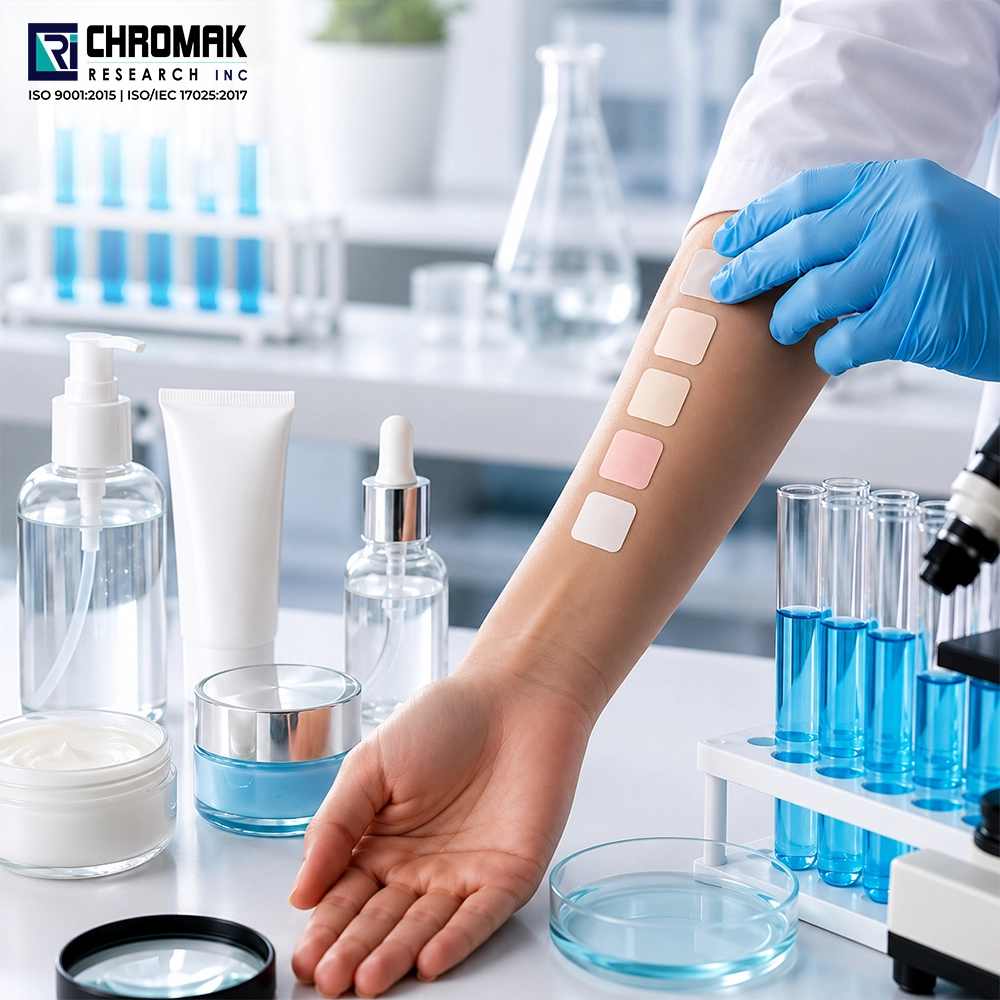
Patch testing is a controlled dermatological procedure in which the effect on the skin of a cosmetic or personal care product is evaluated. A small amount of product is applied onto the skin and monitored under controlled conditions for hours or days in order to look for redness, irritation, swelling and allergic reactions.
This approach is important in the safety testing of cosmetic products and helps to assess compatibility of the product with sensitive and allergy-prone skin. Patch testing also can assist with product claims like:
Professional patch testing is becoming a vital method for cosmetic brands to ensure product safety and quality as consumer awareness about skin care safety keeps rising.
Why Patch Testing is Critical for Cosmetics?
Cosmetic brands and manufacturers must understand the importance of patch testing. Some cosmetic products include active ingredients, preservatives, fragrances and botanical extracts, which can cause irritation or allergic reactions for some people.
Professional patch testing is helpful:
The regulatory agencies and cosmetic safety standards have mentioned skin compatibility testing as an important issue for protecting consumers.
Skin Irritation Testing for Cosmetics
The primary objective of skin irritation testing for cosmetics is to determine if repeated or short-term product use could result in redness, itching, dryness or inflammation of the skin.
This testing is particularly crucial for:
Irritation testing is carried out by cosmetic brands so that their products can be safe for everyday use and will not be harmful to any skin type.
Hypoallergenic Cosmetic Testing
Gentle and sensitive skin products are becoming more popular with consumers. Hypoallergenic cosmetic testing assists brands to substantiate these claims with science. Patch testing is a method used to determine if products are less likely to cause allergic reactions when used normally.
This testing is very beneficial for:
Accurate testing also helps to build customer trust and enhance brand reputation.
Sensitive Skin Testing for Cosmetics
There are a number of consumers who have sensitive skin today due to environmental exposure, extreme ingredients or allergies. Sensitive skin testing of cosmetics has become a must in cosmetic product development.
Patch testing procedures are intended to observe skin reactions for designated amounts of time, for example, 24 hours, 48 hours, and 72 hours. Such assessments are important to gauge product tolerability at normal levels of use.
Sensitive skin testing offers manufacturers a way to minimize the risk of irritation and produce safer product formulations that are effective for wider consumer use.
Benefits of Patch Testing for Cosmetic and Personal Care Products
Here are a few important Benefits of Patch Testing for Cosmetic and Personal Care Products to manufacturers and consumers.
1. Consumer Safety
Patch testing is used to help determine whether products may cause allergic reactions or be skin sensitizing prior to their commercial sale.
2. Regulatory Compliance
Testing is used to ensure compliance with cosmetics safety standards and international standards.
3. Product Quality Improvement
Manufacturers can refine formulations based on test results to improve overall product performance.
4. Stronger Marketing Claims
Patch testing benefits product claims including "dermatologically tested" and "hypoallergenic.
5. Increased Consumer Confidence
Products that are professionally safety tested are more likely to be trusted by consumers.
What Chromak Research Offers?
This will enable cosmetic manufacturers to pick a reliable testing solution to ensure they create the best possible product for their customers and understand the benefits that Chromak Research has to offer.
Chromak Research provides special patch testing for cosmetics and personal care products to test for skin compatibility, skin irritation and cosmetic product safety.
They have a testing process covering:
Our laboratory also provides a variety of cosmetic testing services such as microbiological testing, stability testing, compatibility testing, and toxicological analysis.
Why Choose Chromak Research?
The safety evaluation and advanced laboratory capabilities of many cosmetic manufacturers make them a perfect choice for Chromak Research.
Their testing services are designed to assist brands in enhancing cosmetic product safety and meet consumer needs and regulatory standards.
Conclusion
Patch testing has a significant part to play in the safety, quality and reliability of cosmetic and personal care products. Patch testing not only helps manufacturers produce consumer-friendly products, but also helps evaluate skin compatibility and minimize the risk of irritation.
The need for quality cosmetic testing has never been greater, as the demand for safer skin care and beauty products has increased. Brands can rely on expert labs such as Chromak Research to ensure compliance with regulations, build trust with consumers, and bring high-quality products to the market.
Frequently asked questions (FAQs)
Patch testing is a dermatological process that is employed to determine the potential for cosmetic products to irritate or cause allergies to the skin.
Patch testing is used to ensure cosmetic product safety and protect consumers, as well as claims such as “hypoallergenic” or “dermatologically tested.
Patch testing is routinely used with skin care products, cosmetics, fragrances, lotions and creams, hair care, and personal products.
Hypoallergenic cosmetic testing is a method to determine products that are less likely to cause allergic skin reactions.
The usual patch testing times are 24 hours, 48 hours, and 72 hours to see how the skin reacts.
Chromak Research offers unique cosmetic testing services, advanced lab equipment, customized testing methods, and accurate cosmetic product safety and personal care products.
Disclaimer: All the information on this blog is published in good faith and for general information purposes only. The information contained in this blog might be provided on an “as is” based on Wikipedia, Google, and other scientific articles. We are not liable for any injuries or damages for the use of the information. Please do your own research before you use this information for any purpose.