Residual Solvents Testing: Why GC & Karl Fischer Analysis Matter for Product Quality
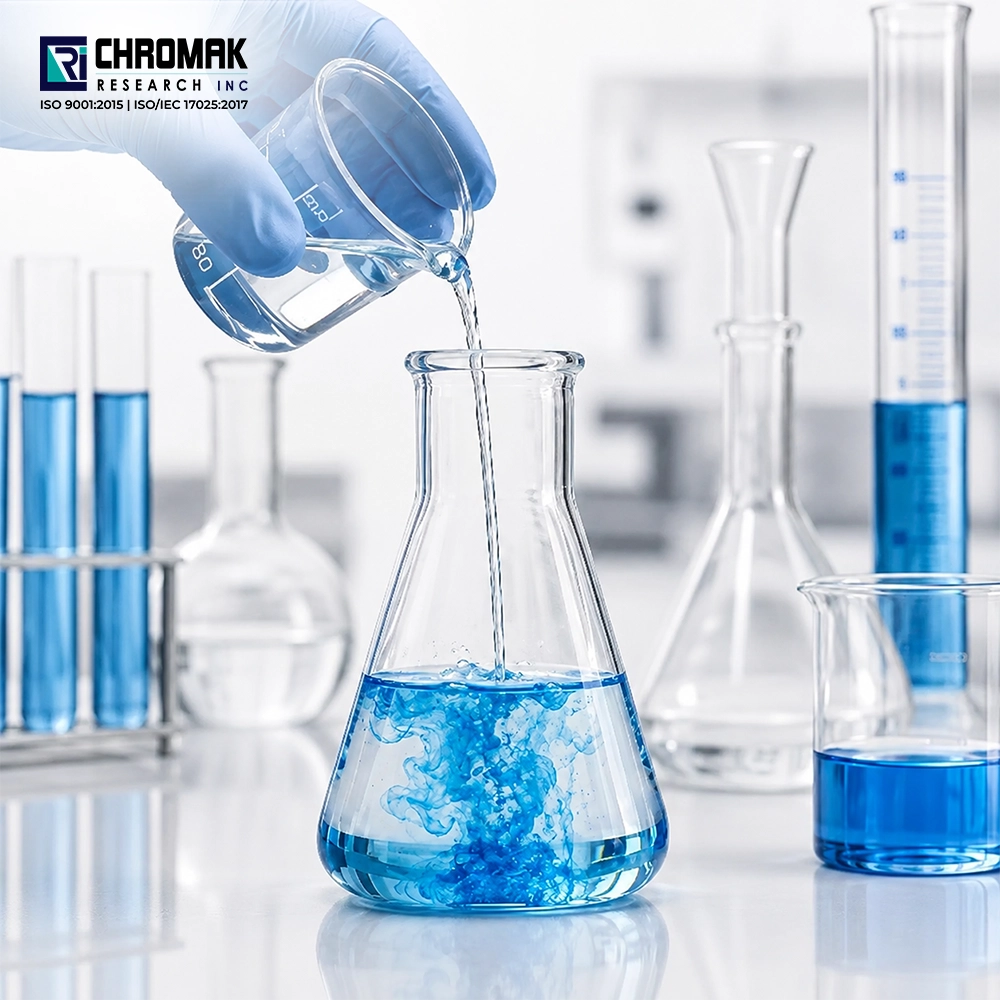
Residual Solvents Testing is a critical part of quality assurance in the pharmaceutical, cosmetic, and chemical industries. During manufacturing, solvents are commonly used in synthesis, extraction, purification, and cleaning processes. Although these solvents play an important role in production, traces can remain in the final product if they are not adequately removed. Monitoring both residual solvents and moisture helps manufacturers ensure product safety, quality, and regulatory compliance.
At Chromak Research, Gas Chromatography (GC) and Karl Fischer (KF) testing are used to accurately evaluate residual solvent levels and moisture content, helping clients meet stringent industry standards.
What is Residual Solvents Testing by GC & KF?
Residual Solvents Testing refers to the analysis of volatile organic solvents that may remain in raw materials, active pharmaceutical ingredients (APIs), finished products, or cosmetics after manufacturing. Gas Chromatography (GC) for Residual Solvents is the preferred analytical technique because it can detect and quantify trace levels of volatile compounds with excellent sensitivity and precision.
Along with solvent analysis, Karl Fischer moisture testing determines the exact amount of water present in a sample. Excess moisture can affect product stability, potency, shelf life, and overall performance. Together, GC and KF provide a comprehensive assessment of product purity and quality.
Importance of Residual Solvents Testing by GC & KF?
The importance of Residual Solvents Testing goes beyond meeting regulatory requirements. It helps manufacturers:
Routine testing minimizes risks while maintaining high manufacturing standards.
Gas Chromatography (GC) for Residual Solvents
Gas Chromatography (GC) for Residual Solvents is widely recognized for its ability to separate and quantify volatile compounds at very low concentrations. It is suitable for testing:

GC delivers accurate, reproducible results that support quality control, process validation, and regulatory compliance.
Karl Fischer Moisture Testing for Residual Solvents
Karl Fischer moisture testing is a highly accurate method used to measure water content in solid, liquid, and semi-solid samples. Even small amounts of moisture can impact chemical stability and product performance.
Karl Fischer analysis is commonly performed for:
Combining KF analysis with GC testing provides a more complete understanding of overall product quality.
GC & KF Testing for Cosmetics
GC & KF testing for cosmetics helps manufacturers verify the quality and safety of creams, lotions, gels, serums, fragrances, and other personal care products. Residual solvents can remain after extraction or formulation, while excess moisture may affect texture, microbial stability, and shelf life.
Regular analytical testing supports consistent product performance and compliance with industry quality expectations.
USP 467 Residual Solvents and ICH Q3C Residual Solvents
Pharmaceutical manufacturers rely on internationally recognized guidelines such as USP 467 Residual Solvents and ICH Q3C Residual Solvents to control solvent limits in drug substances and drug products.
These guidelines classify solvents according to their potential toxicity and establish acceptable concentration limits. Testing according to these standards helps manufacturers demonstrate regulatory compliance while protecting patient safety.
Why Choose Chromak Research for Residual Solvents Testing?
If you are searching for Why Choose Chromak Research for Residual Solvents Testing, our laboratory offers reliable analytical support backed by modern instrumentation and experienced scientists.
Chromak Research provides:
Whether you require routine quality control, research support, or product validation, our testing services help deliver dependable analytical results.
Conclusion
Residual Solvents Testing plays a vital role in ensuring the safety, quality, and regulatory compliance of pharmaceutical, cosmetic, and chemical products. By combining Gas Chromatography (GC) for Residual Solvents with Karl Fischer moisture testing, manufacturers gain comprehensive information about solvent residues and moisture levels. Working with a trusted analytical laboratory like Chromak Research helps organizations maintain product quality while meeting industry standards such as USP 467 Residual Solvents and ICH Q3C Residual Solvents.
Frequently Asked Questions (FAQs)
Residual solvents testing uses Gas Chromatography to detect solvent residues, while Karl Fischer testing measures moisture content to ensure product quality and compliance.
It helps ensure product safety, stability, regulatory compliance, and consistent manufacturing quality.
Pharmaceutical, cosmetic, chemical, biotechnology, and research industries commonly use these analytical techniques.
Pharmaceutical testing generally follows USP 467 Residual Solvents and ICH Q3C Residual Solvents guidelines.
Chromak Research offers accurate GC and Karl Fischer analysis, experienced analytical scientists, reliable reporting, and testing solutions tailored to pharmaceutical, cosmetic, and chemical industries.
Disclaimer: All the information on this news is published in good faith and for general information purposes only. The information contained in this news might be provided on an “as is” based on Wikipedia, Google, and other scientific articles. We are not liable for any injuries or damages for the use of the information. Please do your own research before you use this information for any purpose.